How Do You Clear Fungus Gnats and Spider Mites Without Burning Leaves?
University Extension IPM cultural controls, Bti drenches, and why kitchen dish soap strips protective leaf waxes.

Reaching for kitchen dish soap to clear indoor plant pests is a harmful myth because household detergents strip away protective leaf waxes and cause phytotoxic leaf burn. When soft-bodied pests or gnats appear on indoor specimens like Chamaedorea elegans or Epipremnum aureum, university extension integrated pest management provides documented cultural controls and labeled treatments that clear pests without damaging foliage.
How Do You Control Fungus Gnats in Houseplant Potting Mix?
Fungus gnat larvae feed in persistently wet upper organic media. They are controlled primarily by drying the top 1 to 2 inches of substrate, placing yellow sticky traps for adult gnats, and applying EPA-registered Bacillus thuringiensis israelensis drenches.
Topsoil Dry-Down vs. Kitchen Soap Leaf Damage
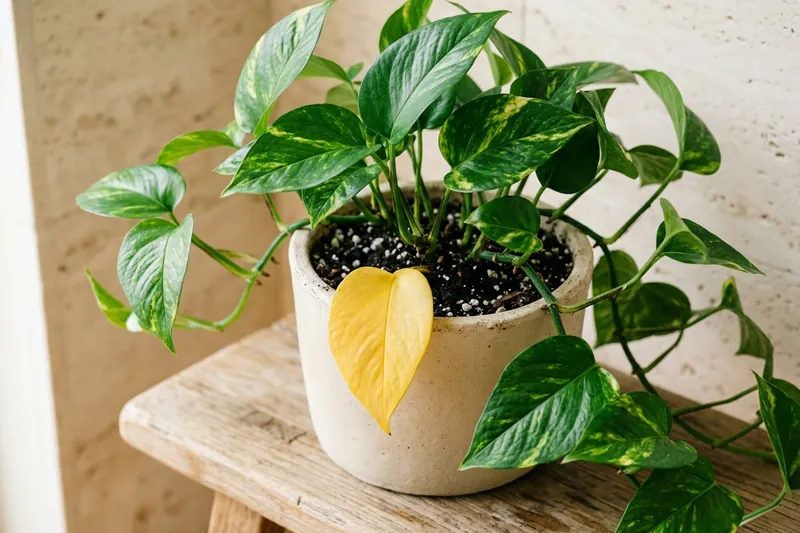
Letting the top one to two inches of potting mix dry out completely starves surface-dwelling gnat larvae without dehydrating deeper roots.
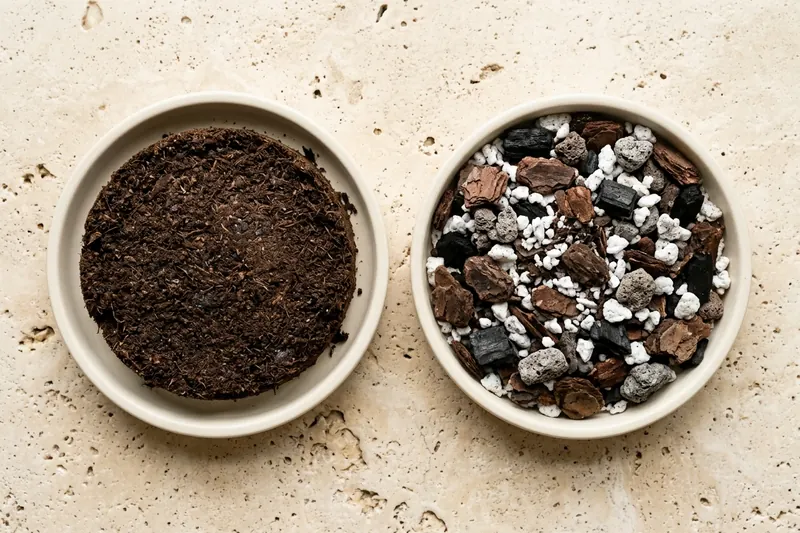
Amending soil with 20% to 30% perlite or pumice speeds up surface drying and eliminates the stagnant organic sludge gnats feed on.
Allowing the top 1 to 2 inches of potting mix to dry out reduces moisture where gnat larvae feed in upper organic media. Using yellow sticky traps catches adult gnats, while EPA-registered Bacillus thuringiensis israelensis drenches provide biological control of larvae in the substrate.
Why Does Kitchen Dish Soap Cause Phytotoxic Burn on Plant Foliage?
Household dishwashing detergents are not registered for plant pest control under FIFRA (7 U.S.C. § 136) and carry phytotoxicity risk. Kitchen detergents strip epicuticular leaf waxes and cause phytotoxic burn, so avoid unlabelled soap mixtures and use only labeled potassium-salt insecticidal soaps.
When treating soft-bodied foliar pests such as spider mites and mealybugs, apply only labeled potassium-salt insecticidal soaps. In accordance with university extension integrated pest management guidelines, always complete a 24-hour single-leaf patch test before spraying the entire plant.
How Do You Meet Environmental Needs for Potted Specimen Plants?
Providing proper light levels and moisture triggers maintains healthy container culture for indoor specimens. Chamaedorea elegans requires 100 to 350 foot-candles (20 to 70 PPFD) of light and reaches 2 to 4 feet in height as a feathery understory palm.
Water Chamaedorea elegans when the top 1.5 inches of substrate are dry. For Epipremnum aureum, provide 75 to 400 foot-candles (15 to 80 PPFD) of light, allowing the top 50 percent of the porous potting mix to dry before watering again.
Which Pest-Treated Houseplants Are Safe Around Cats and Dogs?
According to the ASPCA Animal Poison Control Center database, Chamaedorea elegans is non-toxic to cats and dogs. In contrast, Epipremnum aureum contains insoluble calcium oxalate crystals that cause oral irritation, drooling, and vomiting in cats and dogs, so keep trailing vines completely out of reach of pets so hanging stems cannot be chewed.
For container culture, The Plant Roast's Side-Eye ($35 USD) is an asymmetrical 4-inch self-watering PLA planter 3D-printed in the USA with an internal sub-irrigation reservoir and buoyancy water-level indicator across 16 two-tone matte finishes. Pair its sub-irrigation reservoir with a porous potting mix amended with 20 to 30 percent perlite, pumice, or fine bark rather than dense unamended nursery peat. Physical on-hand shelf stock is currently at zero, so check live made-to-order availability or join our waitlist for restock dispatches.
References
- Cornell Integrated Pest Management (NYSIPM) & Cranshaw, W. (2022). Integrated Pest Management for Houseplants: Fungus Gnats, Spider Mites, and Mealybugs. Cornell University Cooperative Extension / NYSIPM Indoor Plant Bulletin. EXT_ID:CORNELL-NYSIPM-HP01
- United States Environmental Protection Agency (EPA) (2023). Federal Insecticide, Fungicide, and Rodenticide Act (FIFRA) Registration & Minimum Risk Pesticide Guidance (7 U.S.C. s 136; 40 CFR 152.25(f)). U.S. EPA Office of Pesticide Programs Regulatory Guidance. EPA_ID:FIFRA-40CFR-152-25F
- ASPCA Animal Poison Control Center (2024). Toxic and Non-Toxic Plants Database: Araceae, Moraceae, Asparagaceae, Begoniaceae, Polypodiaceae, Apocynaceae, and Marantaceae. American Society for the Prevention of Cruelty to Animals (ASPCA) Veterinary Toxicology Registry. ASPCA_ID:ASPCA-APCC-PLANTS-2024

