Porous Terracotta vs. Non-Porous Planters: Matching Container Walls to Your Watering Habit
Why unglazed terracotta pots wick water out of soil fast while non-porous planters hold moisture longer, and how to pick the right pot walls for your watering routine.

Container materials influence how water moves through potting soil, and container wall porosity affects how moisture leaves the pot. When growing indoor foliage such as Peperomia obtusifolia or trailing vines like Epipremnum aureum, the physical properties of the container walls govern whether water evaporates solely from the topsoil or also escapes through the sides of the pot. Understanding the moisture physics of porous terracotta versus non-porous containers helps you select the right pot for your plant care routine.
How Do Porous Clay Walls Change Soil Moisture?
Porous terracotta clay permits water evaporation directly across exterior sidewalls in addition to topsoil evaporation. This sidewall evaporation allows moisture to leave through the pot walls rather than solely through the top of the container.
How Pot Material Governs Soil Moisture and Oxygen Diffusion
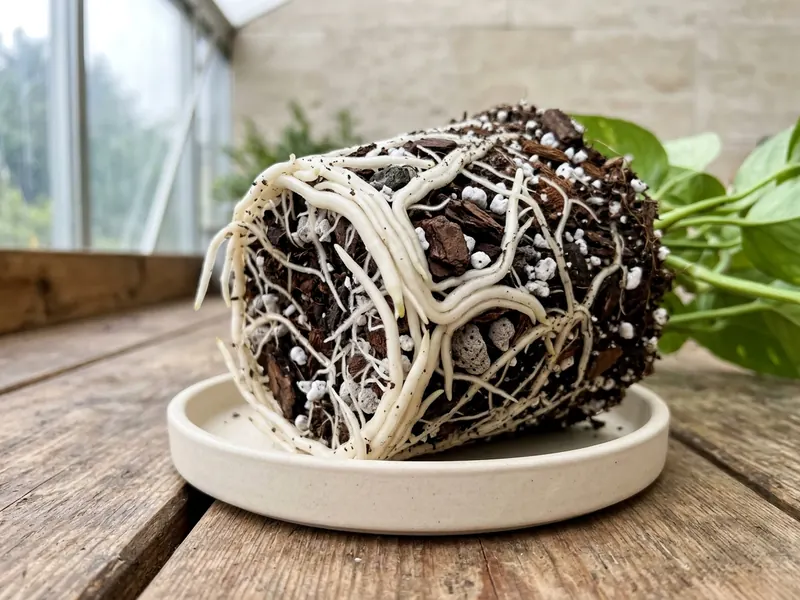
Unglazed terracotta pulls water through its clay pores, helping chronic overwaterers prevent stagnant moisture in the root zone.
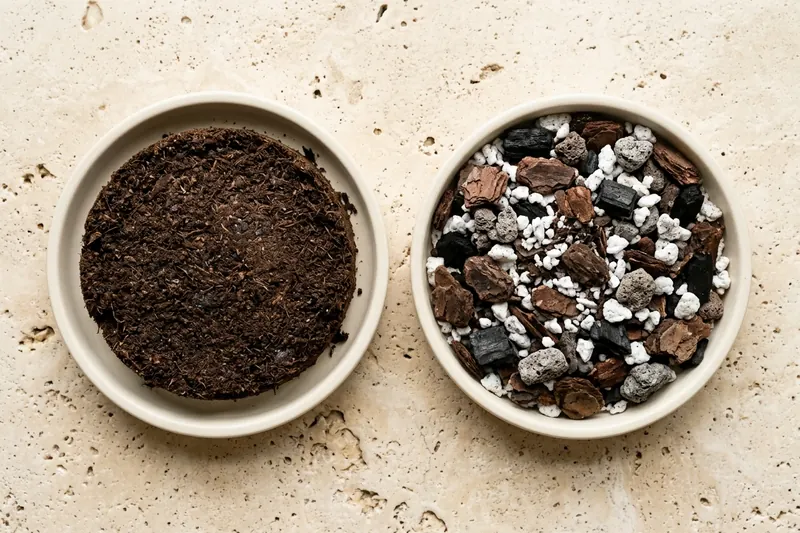
When using non-porous glazed or 3D-printed planters, blend 20% to 30% perlite or bark to keep air spaces open without rapid dry-out.
Because unglazed clay walls permit evaporation across exterior sidewalls, moisture loss occurs through the sides of the container as well as the upper surface. For indoor gardeners who check their plants regularly, understanding sidewall evaporation clarifies why pots with porous walls behave differently from sealed containers during soil dry-down.
How Do Non-Porous Containers Restrict Water Loss?
Non-porous containers restrict water loss to drainage and topsoil surfaces. By preventing evaporation through the sidewalls, non-porous pots retain water within the container until it drains freely or evaporates from the topsoil.
While non-porous container walls eliminate sidewall evaporation, capillary forces retain a saturated perched water table at the bottom of the pot after free drainage stops. In fine-textured substrates, this saturated zone holds low air-filled porosity below ten percent, restricting oxygen diffusion and inducing root hypoxia. Using taller containers or coarser porous media restores root-zone aeration, while capillary sub-irrigation systems move water upward from a bottom reservoir through unsaturated substrate pores when paired with potting media amended with twenty to thirty percent perlite, pumice, or fine bark.
How Do You Match Container Materials to Your Watering Habit?
Matching container choices to your routine requires understanding how each wall type loses moisture. Porous clay containers permit evaporation across exterior sidewalls, while non-porous containers restrict water loss to drainage and topsoil surfaces.
Regardless of container wall type, checking the specific dry-down needs of each plant prevents root-zone stress. For Epipremnum aureum, wait until the top fifty percent of the porous mix is dry before watering. For semi-succulent plants like Peperomia obtusifolia, allow the top sixty to seventy-five percent of the potting mix to dry out before adding moisture. When using non-porous containers, ensure the substrate contains coarse porous media to keep root zones aerated.
Which Common Indoor Plants Require Safe Placement Around Pets?
According to ASPCA Animal Poison Control Center records, common trailing plants like Epipremnum aureum contain insoluble calcium oxalate crystals that cause oral irritation, drooling, and vomiting in cats and dogs. In contrast, species such as Peperomia obtusifolia are non-toxic to cats and dogs.
For households with pets, choosing non-toxic species like Peperomia obtusifolia provides safe indoor greenery. If you grow toxic trailing vines like Epipremnum aureum, keep them elevated away from pets, although climbing animals can still access high surfaces.
When you want steady bottom wicking paired with an airy chunky mix, The Plant Roast's Side-Eye ($35 USD) is an asymmetrical 4-inch self-watering PLA planter 3D-printed in the USA with an internal sub-irrigation reservoir and buoyancy water-level indicator. Physical on-hand shelf stock is currently at zero, so check live made-to-order availability or join our waitlist for restock dispatches.
References
- Passioura, J. B. (2006). The perils of pot experiments. Functional Plant Biology, Vol. 33, Issue 12, pp. 1075-1079. DOI:10.1071/FP06223
- Ferrarezi, R. S., Weaver, G. M., van Iersel, M. W., & Testezlaf, R. (2015). Subirrigation: Historical overview, challenges, and future prospects. HortTechnology, Vol. 25, Issue 3, pp. 262-276. DOI:10.21273/HORTTECH.25.3.262
- ASPCA Animal Poison Control Center (2024). Toxic and Non-Toxic Plants Database: Araceae, Moraceae, Asparagaceae, Begoniaceae, Polypodiaceae, Apocynaceae, and Marantaceae. American Society for the Prevention of Cruelty to Animals (ASPCA) Veterinary Toxicology Registry. ASPCA_ID:ASPCA-APCC-PLANTS-2024

