Why Is My Plant Growing Long Bare Stems and Losing Its Variegation?
Why your indoor vines stretch out with long bare stems and lose their bright variegation, and how light math helps you fix leggy growth.

Indoor vines placed far from windows often develop long bare stems when they receive insufficient daily light. When Epipremnum aureum or Philodendron hederaceum begins pushing elongated stems with wide gaps between leaves, the plant is showing the classic visual symptoms of low light. Understanding how indoor light drops off across a room and tracking daily light helps you correct leggy growth and maintain healthier indoor foliage.
Why Do Stems Stretch and Widen the Gaps Between Leaves Indoors?
When an indoor plant receives insufficient daily light, chronic low daily light integral triggers shade-avoidance stem stretching, known as etiolation, producing thinner leaves and longer internodes between leaves. Under low light, the plant shifts its growth allocation toward stem elongation in an effort to reach higher light levels rather than building root biomass.
Why Stepping Back From Windows Stretches Stems and Fades Color
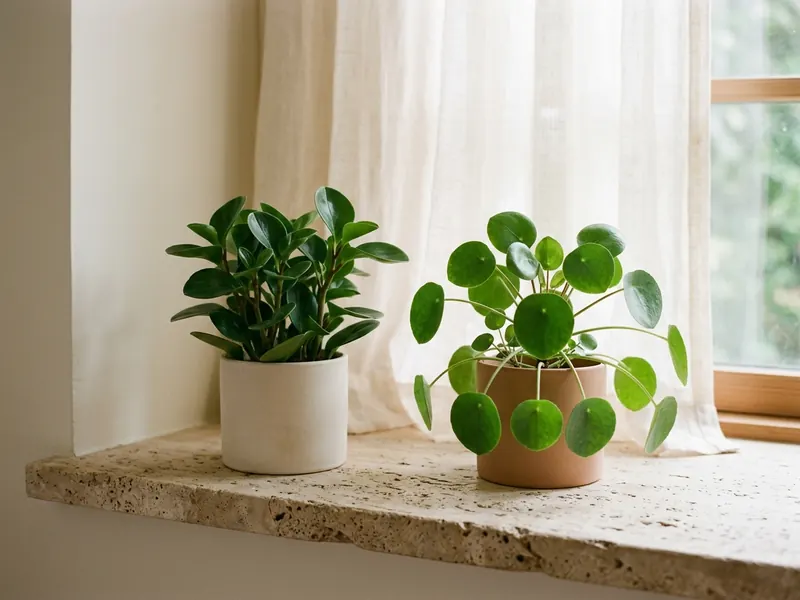
Moving five feet back from a window cuts light intensity by more than half, forcing stems to stretch toward the nearest sky view.
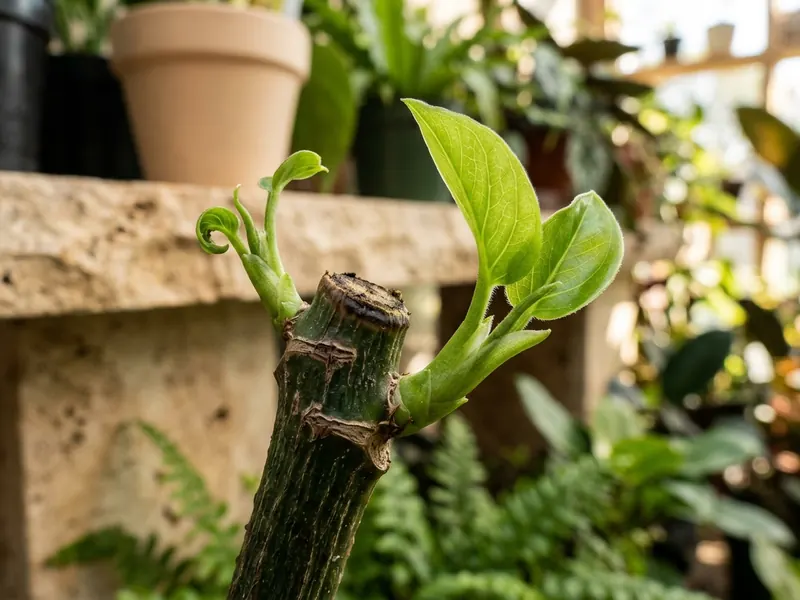
Snip stretched bare stems back just above a healthy leaf node, then move the pot into 150 to 500 foot-candles so fresh buds grow compact.
Research shows that daily light integral governs stem internode elongation, leaf mass per area, and root-to-shoot allocation. Under chronic low light, plants develop stretched internodes, thinner foliage with reduced leaf mass, and lower root biomass. Indoor light intensity drops steeply with distance from windows as ceiling and interior wall geometry narrow the direct view of the sky. In Northern Hemisphere rooms, unobstructed South and West exposures provide the strongest afternoon light near the glass, East windows provide gentle morning light suited to medium-light plants, and North windows deliver low diffused light near the pane. While low-light species survive at 50 to 150 foot-candles (10 to 30 PPFD), medium-light foliage thrives at 150 to 500 foot-candles (30 to 100 PPFD), with Epipremnum aureum requiring 75 to 400 foot-candles (15 to 80 PPFD) and Philodendron hederaceum requiring 100 to 400 foot-candles (20 to 80 PPFD). When pots sit in dim spots below these ranges, stems stretch out and leaves grow thinner.
Why Does Variegated Foliage Lose Its Pattern in the Shade?
For variegated foliage cultivars such as Epipremnum aureum, light levels below recommended ranges lead to loss of foliar variegation as leaves produce additional chlorophyll to capture available light. In low light, the plant produces additional chlorophyll across new leaves to sustain basic photosynthetic capacity.
When daily light drops below maintenance needs, variegated foliage shifts toward solid green growth. In Northern Hemisphere rooms, unobstructed South and West exposures provide strong afternoon light near the pane, while East windows offer gentle morning light suited to medium-light foliage. Positioning plants where they receive adequate daily light within their recommended ranges helps sustain healthy foliar development.
How Do You Prune Leggy Stems and Restore Compact Growth?
Clean pruning cuts should be made 0.25 inch (6 mm) above a leaf node using blades wiped with 70 percent isopropyl alcohol, removing no more than 25 to 30 percent of green foliage at one time. Pruning removes elongated bare stem sections, while maintaining adequate daily light integral helps new growth develop without stretched internodes.
When trimming leggy stems, make a clean cut one quarter inch above a leaf node. Position the plant where it receives appropriate light within its species range, such as gentle morning light from an East window. Check the soil before watering, allowing the top 50 percent of the porous potting mix to dry out before adding moisture. In frost-free USDA Zones 10 to 12, keep Epipremnum aureum strictly indoors and bag any discarded trimmings rather than composting them outdoors.
Which Trailing Houseplants Require Safe Placement Around Pets?
According to ASPCA Animal Poison Control Center records, common trailing plants like Epipremnum aureum and Philodendron hederaceum contain insoluble calcium oxalate crystals that cause oral irritation, drooling, and vomiting in cats and dogs. In contrast, species such as Chlorophytum comosum and Peperomia obtusifolia are non-toxic to cats and dogs, though chewing Chlorophytum comosum in volume can cause mild digestive upset.
For households with cats and dogs, growing non-toxic species like Chlorophytum comosum or Peperomia obtusifolia offers pet-safe foliage options. If you grow toxic trailing vines, keeping them elevated on wall mounts or high shelves helps keep stems off the floor, though vines must be regularly trimmed so they do not hang down into pet reach, and climbing pets can still reach elevated surfaces.
For mounting plants on walls with controlled lighting, The Wallflower With Cord ($50 USD) is a flush-mounting self-watering wall planter with a water-level indicator and adjustable full-spectrum corded LED Light Halo. Pair the wall-mounted reservoir with a porous substrate containing 20 to 30 percent perlite or bark, and run the full-spectrum Light Halo on a consistent 8-hour to 14-hour daily photoperiod with dark rest. Physical on-hand shelf stock is currently at zero, so check live made-to-order availability or join our waitlist for restock dispatches.
References
- Chen, J., McConnell, D. B., Henny, R. J., & Norman, D. J. (2020). Cultural Guidelines for Commercial Production and Interior Acclimatization of Tropical Foliage Plants. University of Florida IFAS Extension (UF/IFAS), Bulletin ENH957 / CIR480. EXT_ID:UF-IFAS-ENH957
- Poorter, H., Niinemets, U., Ntagkas, N., Siebenkas, A., Maenpaa, M., Matsubara, S., & Pons, T. L. (2019). A meta-analysis of plant responses to light intensity for 70 traits ranging from molecules to whole plant performance. New Phytologist, Vol. 223, Issue 3, pp. 1073-1105. DOI:10.1111/nph.15754
- Penn State Extension Horticulture Team (2022). Pruning, Pinching, and Propagating Indoor Houseplants by Stem Nodes. Penn State Cooperative Extension, Bulletin HORT-INDOOR-04. EXT_ID:PSU-EXT-HORT04
- ASPCA Animal Poison Control Center (2024). Toxic and Non-Toxic Plants Database: Araceae, Moraceae, Asparagaceae, Begoniaceae, Polypodiaceae, Apocynaceae, and Marantaceae. American Society for the Prevention of Cruelty to Animals (ASPCA) Veterinary Toxicology Registry. ASPCA_ID:ASPCA-APCC-PLANTS-2024

