Where to Cut When Pruning: Nodes, Internodes, and Apical Dominance
Where you place the scissors decides whether your vine bushes out or leaves an ugly dead stub. Here's how to spot the node and make a clean cut every time.

Snipping a bare vine stem at random leaves an ugly brown stub instead of encouraging fresh side branches. Left alone, indoor vines like Epipremnum aureum, Philodendron hederaceum, and Hoya carnosa love to put all their energy into one long, stringy runner while the top of the pot thins out. Once you know how to spot a leaf node, every cut wakes up fuller growth on the main plant and gives you clean cuttings to root.
Why Does Pruning the Tip Make a Vine Branch Out Underneath?
A growing vine tip sends a hormone called auxin down the stem that tells sleepy side buds at lower leaf nodes to stay put, a habit growers call apical dominance. Snipping off that main tip clears the signal so another plant hormone, cytokinin, wakes those side buds up into fuller branches.
Cutting Quarter-Inch Above a Node vs. Leaving Dead Stubs
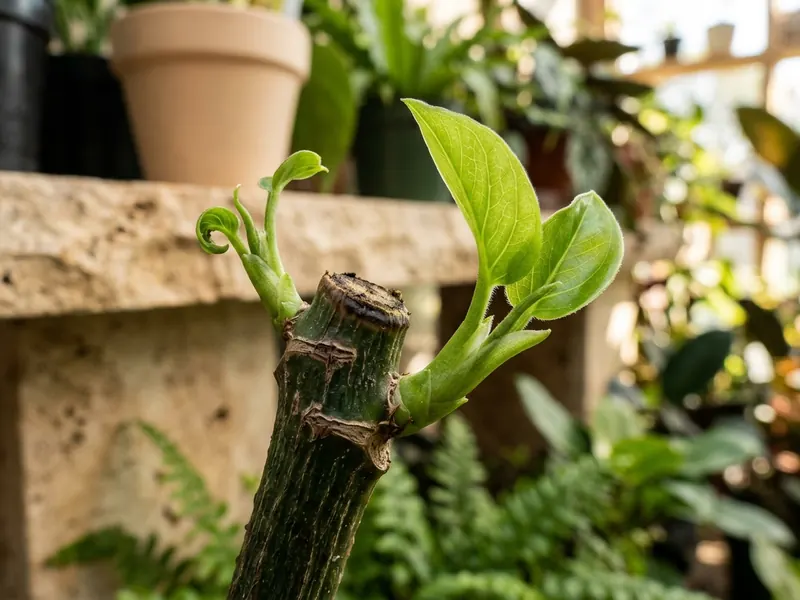
Skip long bare stem stubs that just shrivel up, and snip cleanly right above the little side bud.
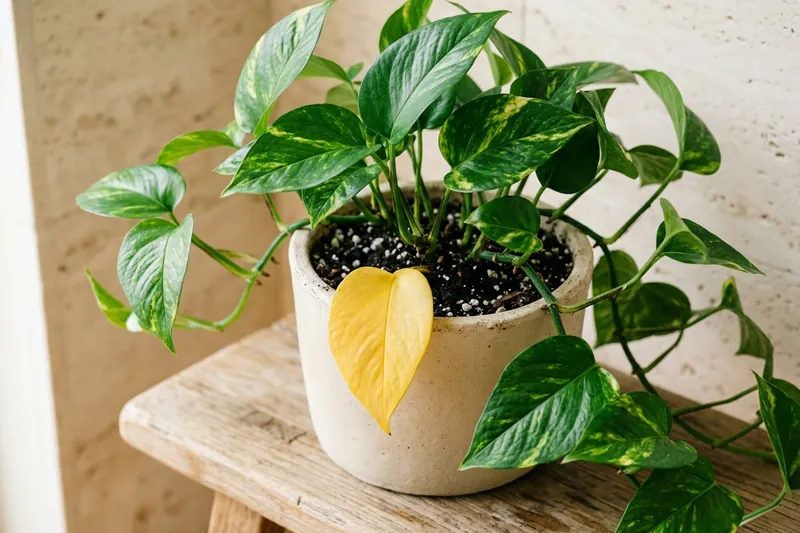
Swap out the water once a week for fresh oxygen and pot cuttings into chunky mix once roots reach 1 to 2 inches.
Once those side buds wake up in decent indoor light (around 150 to 500 foot-candles, or 30 to 100 PPFD, for medium-light vines), your plant puts its energy into bushier stems instead of one long string. Just don't take off more than 25 to 30 percent of the green leaves in a single haircut. Leaving plenty of healthy leaves on the pot gives the mother plant the fuel it needs to push strong new shoots.
Where Above a Leaf Node Should You Put Your Scissors?
Make a clean cut 0.25 in. (6 mm) above a healthy leaf node using sharp blades wiped down first with 70 percent rubbing alcohol (isopropyl alcohol). If you cut halfway down the bare stem space between leaves, called the internode, there's no bud there, so that leftover stub just yellows and shrivels back to the node anyway.
Take a quick look at a stem on Epipremnum aureum or Philodendron hederaceum before you snip: the node is the little raised ring where a leaf stem meets the vine, usually with tiny root bumps and a tucked-in side bud. Cutting 0.25 in. (6 mm) above that ring keeps the bud from drying out without leaving a long dead stick. Wipe your blades again with 70 percent isopropyl alcohol before moving to another pot so you never spread plant sap illnesses around your shelves.
How Do You Root Stem Cuttings in Water and Move Them to Soil?
New roots grow right out of the node ring rather than bare stem pieces, so every cutting needs at least one node under water with any bottom leaves stripped off so they don't rot. Swap out the jar water once a week to put fresh oxygen back in, and pot your cuttings into airy soil as soon as the new roots hit 1 to 2 in. long.
If you wait until water roots are way longer than 1 to 2 in., they have a much harder time adjusting to potting mix. When you pot up rooted Epipremnum aureum, Philodendron hederaceum, Hoya carnosa (250 to 600 FC, letting airy mix dry 75 percent between waterings), or baby offshoots from Pilea peperomioides (250 to 550 FC, drying 60 percent), mix 20 to 30 percent perlite or fine bark into your soil so young roots get plenty of air.
What Pet-Safety, Disposal, and Magnet Warnings Should You Keep in Mind?
According to ASPCA toxicology records, Hoya carnosa and Pilea peperomioides are non-toxic to cats and dogs, while Epipremnum aureum and Philodendron hederaceum contain insoluble calcium oxalate crystals that cause mouth irritation, drooling, and vomiting in pets. And if you live in frost-free USDA Zones 10 to 12 (like South Florida or Hawaii), always root Epipremnum aureum indoors or tie leftover trimmings inside household trash bags instead of tossing them into yard waste.
For rooting single-node cuttings in borosilicate glass right on your fridge or steel shelving, The Clinger ($35 USD) uses powerful neodymium rare-earth magnets, so WARNING: keep away from children under 14 because swallowed strong magnets can stick together across intestine walls and cause severe injury or death. Physical on-hand shelf stock is currently at zero, so check live made-to-order availability or join our restock waitlist.
References
- Domagalska, M. A., & Leyser, O. (2011). Signal integration in the control of shoot branching. Nature Reviews Molecular Cell Biology, Vol. 12, Issue 4, pp. 211-221. DOI:10.1038/nrm3088
- Penn State Extension Horticulture Team (2022). Pruning, Pinching, and Propagating Indoor Houseplants by Stem Nodes. Penn State Cooperative Extension, Bulletin HORT-INDOOR-04. EXT_ID:PSU-EXT-HORT04
- Chen, J., McConnell, D. B., Henny, R. J., & Norman, D. J. (2020). Cultural Guidelines for Commercial Production and Interior Acclimatization of Tropical Foliage Plants. University of Florida IFAS Extension (UF/IFAS), Bulletin ENH957 / CIR480. EXT_ID:UF-IFAS-ENH957
- Ferrarezi, R. S., Weaver, G. M., van Iersel, M. W., & Testezlaf, R. (2015). Subirrigation: Historical overview, challenges, and future prospects. HortTechnology, Vol. 25, Issue 3, pp. 262-276. DOI:10.21273/HORTTECH.25.3.262
- ASPCA Animal Poison Control Center (2024). Toxic and Non-Toxic Plants Database: Araceae, Moraceae, Asparagaceae, Begoniaceae, Polypodiaceae, Apocynaceae, and Marantaceae. American Society for the Prevention of Cruelty to Animals (ASPCA) Veterinary Toxicology Registry. ASPCA_ID:ASPCA-APCC-PLANTS-2024
- University of Florida IFAS Assessment of Non-Native Plants (2023). Indoor Containment and Responsible Disposal of Tropical Vines (Epipremnum pinnatum / aureum & Syngonium) in Frost-Free Zones. UF/IFAS Center for Aquatic and Invasive Plants Assessment. EXT_ID:UF-IFAS-INVASIVE-EPI

