Window Direction Light Math Without Guesswork: Mapping Foot-Candles Indoors
Your eyes adjust to dim rooms so well that a dark corner looks bright to you. Here's how to check real window light in two minutes before your plant stretches out.

Your pupils open wide enough to make a shaded hallway look bright and cozy, while a fiddle-leaf fig parked in that same corner slowly starves for light. Nursery tags that just say bright indirect light leave most people guessing between a sunny sill and a dim back wall. Checking real foot-candles (FC) or PPFD across your North, East, South, and West windows takes two minutes and takes the guesswork out of where each pot belongs.
Why Does Plant Light Drop Off So Fast Just a Few Feet From a Window?
Usable plant light drops off fast every foot you move back from a window because your ceiling and walls block out a direct view of the sky. When a plant doesn't get enough total light over the day, it grows thin leaves, long stretched-out stems, and a much smaller root system.
Real Light Levels From the Windowsill to the Back Wall
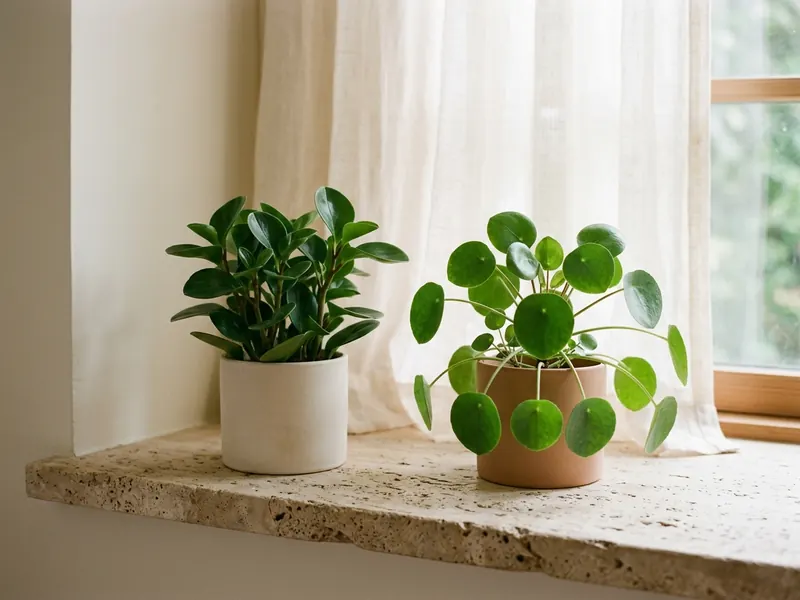
The further a pot sits from a clear view of the sky, the less fuel the leaves actually get.
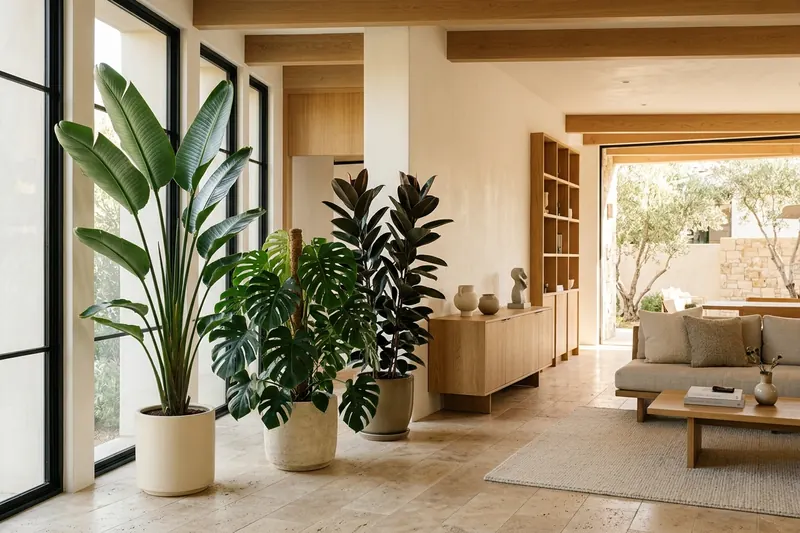
Gives big indoor trees like Ficus lyrata and Strelitzia nicolai the strong daily light they actually need.
Growers call that total daily light budget a plant's daily light integral (DLI), meaning all the usable 400 to 700 nm light leaves soak up from morning to night. Sliding a struggling plant a few feet closer to clear glass gives it way more daily fuel without changing a thing about your fertilizer or watering can.
How Do Foot-Candles Line Up With North, East, South, and West Windows?
University indoor plant guides break home light into three simple ranges: low-light plants get by on 50 to 150 foot-candles (roughly 10 to 30 PPFD), medium-light plants do great at 150 to 500 foot-candles (30 to 100 PPFD), and sun-hungry indoor trees want 500 to 1,000+ foot-candles (100 to 200+ PPFD) for 10 to 14 hours a day. In the Northern Hemisphere, the direction your window faces decides which tier you get near the glass.
Unblocked South and West windows throw the strongest afternoon light right near the pane, East windows give gentle morning sun that medium-light tropicals love, and North windows offer soft, low light close to the sill. Because porch overhangs, street trees, and bug screens all cut into that sky view, taking a quick light-meter reading at leaf height in the morning and afternoon tells you the real number.
Which Houseplants Fit Low, Medium, and Bright Window Spots?
Once you know your number, match the plant to the spot: Aspidistra elatior (Cast Iron Plant, 2 to 3 ft upright blades) handles 50 to 300 foot-candles (10 to 60 PPFD), Peperomia obtusifolia (8 to 12 in. compact mound) likes 150 to 450 foot-candles (30 to 90 PPFD), and Monstera deliciosa grows well across 250 to 700 foot-candles (50 to 140 PPFD). Big sun-lovers like Ficus lyrata (500 to 1,000+ FC, or 100 to 200+ PPFD) and Strelitzia nicolai (600 to 1,200+ FC, or 120 to 250+ PPFD, reaching 6 to 10 ft indoors) belong right next to bright windows getting 10 to 14 hours of strong daily light.
Because dimmer spots also mean smaller root systems that drink slower, always feel the soil before watering: let Aspidistra elatior dry 50 to 75 percent down, let Peperomia obtusifolia dry 60 to 75 percent, let the top 2 to 3 in. of chunky mix dry for Monstera deliciosa, let the top 2 in. dry during spring and summer growth for Strelitzia nicolai, and let Ficus lyrata dry 2 to 3 in. deep without ever sitting in saucer water.
How Can You Add Grow Light on Dim Walls While Keeping Pets Safe?
According to ASPCA toxicology records, Aspidistra elatior and Peperomia obtusifolia are non-toxic to cats and dogs, while Ficus lyrata (irritating ficin and psoralen sap), Monstera deliciosa (insoluble calcium oxalate crystals), and Strelitzia nicolai (stomach irritants in leaves, bracts, and seeds) are toxic to cats and dogs and need to stay out of reach.
For darker interior walls or hanging plants safely above curious pets, The Wallflower With Cord ($50 USD) is a flush-mounting self-watering wall planter with a water-level indicator and adjustable full-spectrum corded LED Light Halo. Pair the reservoir with a chunky potting mix containing 20 to 30 percent perlite or bark, and while physical on-hand shelf stock is zero, check live made-to-order availability or join our restock waitlist.
References
- Chen, J., McConnell, D. B., Henny, R. J., & Norman, D. J. (2020). Cultural Guidelines for Commercial Production and Interior Acclimatization of Tropical Foliage Plants. University of Florida IFAS Extension (UF/IFAS), Bulletin ENH957 / CIR480. EXT_ID:UF-IFAS-ENH957
- Poorter, H., Niinemets, U., Ntagkas, N., Siebenkas, A., Maenpaa, M., Matsubara, S., & Pons, T. L. (2019). A meta-analysis of plant responses to light intensity for 70 traits ranging from molecules to whole plant performance. New Phytologist, Vol. 223, Issue 3, pp. 1073-1105. DOI:10.1111/nph.15754
- Ferrarezi, R. S., Weaver, G. M., van Iersel, M. W., & Testezlaf, R. (2015). Subirrigation: Historical overview, challenges, and future prospects. HortTechnology, Vol. 25, Issue 3, pp. 262-276. DOI:10.21273/HORTTECH.25.3.262
- ASPCA Animal Poison Control Center (2024). Toxic and Non-Toxic Plants Database: Araceae, Moraceae, Asparagaceae, Begoniaceae, Polypodiaceae, Apocynaceae, and Marantaceae. American Society for the Prevention of Cruelty to Animals (ASPCA) Veterinary Toxicology Registry. ASPCA_ID:ASPCA-APCC-PLANTS-2024

